What Happens to Your Body When You Consume Too Much Refined Sugar?
If you try to avoid sweets, you might think this article doesn’t apply to you.
But there’s a good chance you’re wrong — and here’s why.
Refined sugar is everywhere around us. It’s not only found in desserts and sweet treats, but also hidden in unexpected places such as salad dressings, sauces, and even many packaged savory foods.
Although it tastes good, excessive consumption of refined sugar can harm your body in many ways — far beyond simple weight gain.
In this article, we’ll take a closer look at the physiological and health effects of excessive refined sugar intake, and how it can impact your body if you regularly overconsume it.
What Is Refined Sugar?
The term refined sugar refers to processed sugars derived from sugar cane, sugar beets, or corn (in the form of high-fructose corn syrup).
During processing, these sugars are stripped of the natural fiber and nutrients found in the original plant. Unlike natural sugars found in fruits and dairy products, refined sugar is highly concentrated and provides little to no nutritional value.
How Does Refined Sugar Affect Your Body?
Refined Sugar and Energy Levels
Like other simple carbohydrates, refined sugar provides a quick burst of energy — but it’s usually followed by a crash.
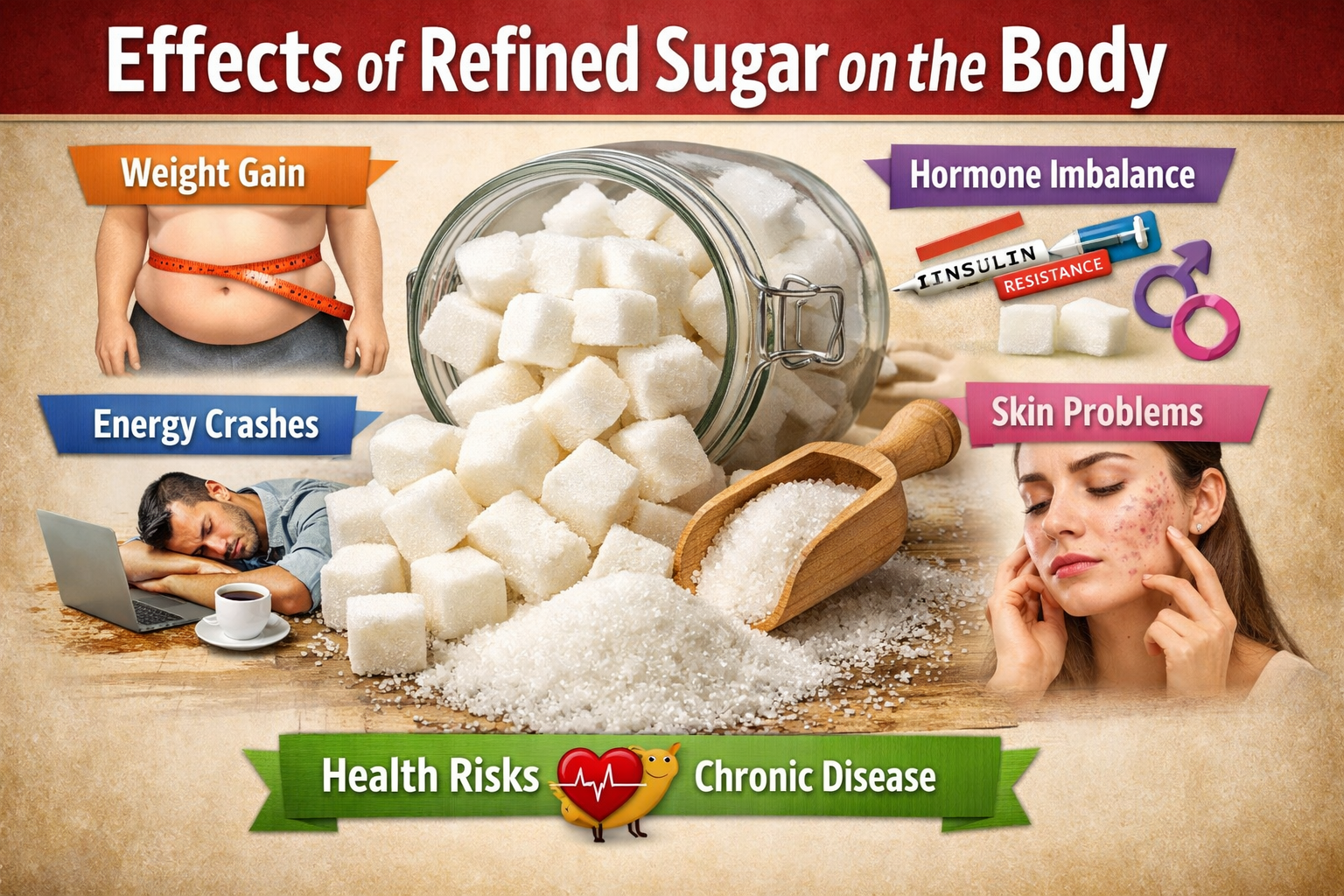
When you consume sugary foods, your blood sugar levels spike rapidly, triggering the pancreas to release large amounts of insulin. This sharp insulin response often leads to a drop in blood sugar levels, causing fatigue, low energy, and irritability.
Refined Sugar and Hormonal Balance
Over time, excessive sugar intake can lead to insulin resistance.
A study published in the journal Obesity (March 2013) found that just one week of high sugar consumption was enough to significantly reduce insulin sensitivity in study participants. Insulin resistance not only increases the risk of developing type 2 diabetes, but can also worsen other health issues such as high blood pressure and metabolic disorders.
Refined Sugar and Weight Gain
Refined sugar is a major contributor to weight gain.
It causes rapid fluctuations in blood sugar levels, which stimulate hunger and promote overeating. In addition, any excess glucose that your body doesn’t immediately use for energy is stored as body fat, further encouraging fat accumulation.
Refined Sugar and Skin Health
High consumption of refined sugar can trigger inflammation throughout the body, including the skin.
Excess sugar intake may worsen inflammatory skin conditions such as acne. Elevated insulin levels can increase oil production in the skin, leading to clogged pores and breakouts.
How Can You Reduce Your Intake of Refined Sugar?
Avoid Sugary Beverages
Soft drinks, energy drinks, and sweetened teas account for nearly half of the average person’s sugar intake. Replacing them with water, herbal tea, or sparkling water can significantly reduce your consumption of refined sugar.
Read Food Labels Carefully
Packaged foods often hide sugar under names like sucrose, corn syrup, or agave nectar. Always check the “added sugars” section on nutrition labels to make informed choices.
Choose Natural Sugars
When you crave something sweet, opt for natural options like fresh fruit. Unlike refined sugar, natural sugars come with fiber, antioxidants, and essential nutrients, making them a far healthier choice.
Experiment with Natural Spices
Enhance the flavor of your food naturally by using spices such as cinnamon, nutmeg, or vanilla extract. They can add a subtle sweetness without the negative effects of sugar.
Conclusion
The widespread presence of refined sugar in modern diets poses a serious risk to both physical and mental health. From weight gain and energy crashes to an increased risk of chronic diseases, the effects of excessive sugar consumption are numerous — and rarely beneficial.
Being mindful of your sugar intake and making smarter choices when shopping and planning meals can help you significantly reduce refined sugar consumption and protect your long-term health.

Related Posts