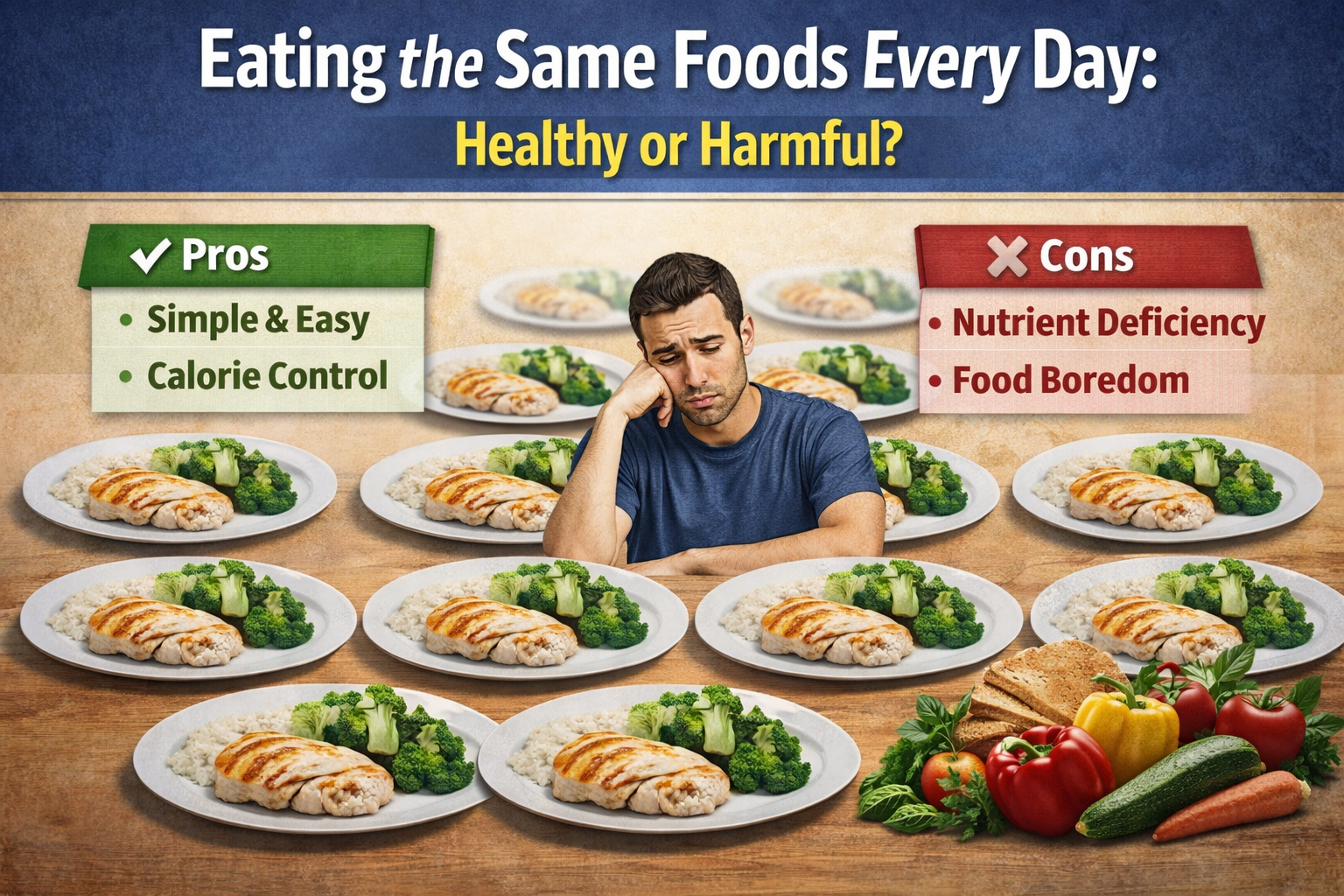
Eating the Same Foods Every Day: Healthy or Harmful?
Humans are creatures of habit — and for many of us, that includes eating the same foods and meals every single day. Whether it’s for convenience, control, or simply a lack of culinary curiosity, a large number of people stick to a predictable and repetitive diet.
But is eating the same foods every day actually healthy?
In this article, we’ll explore the pros and cons of eating a monotonous diet, examine why people choose it, and help you decide whether it’s a smart strategy, a bad habit, or something in between.
Why Do Some People Eat the Same Foods Every Day?
There are many reasons why people stick to a repetitive diet, and they’re not always related to food preferences alone.
1. Convenience and Simplicity
For many people, dietary routine provides comfort and makes daily life easier. Knowing exactly what to buy and cook reduces decision fatigue.
In a fast-paced world filled with constant choices — work, family, social commitments — a predictable meal plan can feel like a relief. You simply follow it without overthinking.
2. Control Over Calories and Nutrition
Eating the same meals can provide a strong sense of control, especially for people who have struggled with dieting, weight management, or unhealthy eating patterns in the past.
Familiar foods eliminate uncertainty around calorie intake, portion sizes, and ingredients. However, when this control becomes too rigid or restrictive, it may be beneficial to explore more variety to avoid potential long-term health risks.
3. Preference for Familiar Tastes
Many people stick to foods they genuinely enjoy. If you’re a picky eater, you may already have a short but satisfying list of favorite meals based on taste, texture, or preparation method.
While this limits experimentation, it also creates a sense of safety and satisfaction in your diet.
4. Limited Time or Budget
Rising food prices, limited budgets, and lack of time or motivation to cook are major reasons behind repetitive eating habits today.
Simple, affordable meals often feel more practical than experimenting with new recipes. However, convenience shouldn’t come at the expense of nutrient balance, which can suffer over time if food choices are too limited.
The good news? Healthy, varied eating doesn’t have to be expensive.
Pros and Cons of Eating the Same Foods Every Day
So, is a monotonous diet a recipe for disaster — or can it be a sustainable and healthy choice?
The answer lies somewhere in the middle.
Benefits of Eating a Repetitive Diet
Predictable Nutrient Intake
Eating the same foods isn’t a problem if your meals are nutritionally balanced. Your body doesn’t recognize foods — it recognizes nutrients.
As long as your diet provides sufficient macronutrients (carbohydrates, fats, proteins) and essential vitamins and minerals, eating the same meals daily or weekly can still support good health.
Simplicity and Reduced Stress
A routine diet saves time on grocery shopping and meal prep, reduces stress, and allows you to focus on other priorities. This can be especially helpful for people with busy schedules and multiple responsibilities.
Easier Weight Management
If your goal is weight loss or maintenance, eating familiar meals makes calorie and macro tracking much easier.
Knowing the nutritional content of your meals reduces the risk of overeating and helps maintain consistency — a key factor in long-term success.
Drawbacks of Eating the Same Foods Every Day
Risk of Nutrient Deficiencies
One of the biggest risks of a monotonous diet is insufficient nutrient diversity.
If your daily meals exclude entire food groups or lack fruits and vegetables, you may miss out on essential vitamins and minerals. In more restrictive diets, eliminating whole macronutrient groups (such as carbohydrates or proteins) can significantly increase the risk of deficiencies like anemia.
Nutrition guidelines recommend including five major food groups daily:
- Vegetables
- Fruits
- Whole grains
- Protein sources
- Dairy or plant-based alternatives
Boredom and Reduced Enjoyment
For people who enjoy food exploration, repetitive eating can quickly become boring.
Food isn’t just fuel — it’s also pleasure and social connection. Eating the same meals out of obligation rather than choice may lead to food fatigue, reduced enjoyment, and even an unhealthy relationship with food over time.
How to Maintain a Healthy Diet Without Drastic Changes
If you thrive on routine but want to avoid the risks of eating the same foods every day, small adjustments can make a big difference.
1. Use Seasonal Foods
Adding seasonal fruits and vegetables to your usual meals naturally increases variety, flavor, and nutrient intake. Seasonal produce is often fresher, more affordable, and nutritionally richer.
2. Swap Ingredients Within Familiar Recipes
Even if you cook the same meals, try rotating protein or carbohydrate sources.
For example:
- Swap chicken for fish or beef
- Replace white rice with quinoa, barley, or whole-grain pasta
These small changes add nutritional diversity without pushing you out of your comfort zone.
3. Ensure Nutritional Balance
The most important aspect of healthy eating is completeness.
Each meal should include carbohydrates, fats, and protein — and don’t forget color. Colorful fruits and vegetables are rich in antioxidants and essential micronutrients that support immune health.
4. Prioritize Whole, Natural Foods
Choosing whole, minimally processed foods ensures higher fiber, vitamin, and mineral intake. While convenience foods save time, they often come with hidden downsides for metabolism and overall health.
Conclusion
If you’re a creature of habit, preferring a more repetitive diet is completely normal — and not inherently unhealthy.
The key is ensuring your meals are balanced, nutrient-dense, and complete. At the same time, don’t be afraid to introduce small variations now and then.
Who knows? Your next small experiment might turn into a new favorite meal that fits perfectly into your routine.

Related Posts